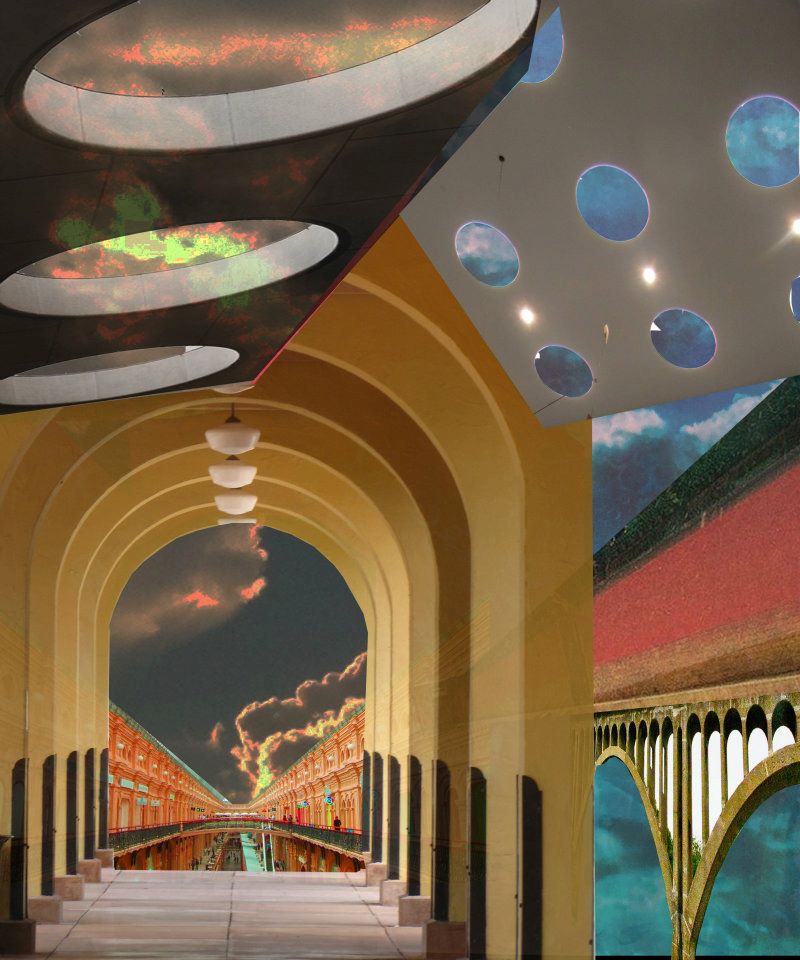
Artistic Thinking: Week 10, Creativity Proj Posted Here

My fellow students, Here are my Creativity projects and below is my Read and React Response:

How to Think Like Leonardo Da Vinci:


After extensive study of Leonardo’s life, reading his journals, and literally walking in his footsteps when exploring da Vinci’s life journey, Michael Gelb formulated the 7 Da Vincian Principals with the steps and process to put them into every day practice.

Leonardo Da Vinci himself has recorded his methods and has

described how to think, how to develop and use our inherent capabilities, how to

integrate everything we learn into one harmonious whole.

Five centuries later, as people search for new ways to improve the performance in their lives, work and art, Da Vinci's ideas have re-emerged as buzzwords of

management and self help ideas and theories such as:

"continuous learning",

"whole-brain thinking",

"mind-body connection"

"brainstorming",

"systems thinking",

"thriving on chaos",

According to Gelb, a key to da Vinci’s creativity lay in his approach to daily life. The ideal
Renaissance thinker was well-rounded and open-minded. The modern Renaissance man or
woman also should be well-rounded in education in both liberal arts and science. One needn’t
be an authority in all fields, but should possess good knowledge. Other essentials for genius-
thinking: computer literacy, mental literacy, and global awareness.


CuriositĂ 
An insatiably curious approach to life and an unrelenting quest for continuous learning.
Young children learn at an astonishing rate. If a child is raised in a home where five languages are spoken, the child will learn to speak all five languages. Why are children so good at learning? They are born with profound, unrelenting curiosity. And genius is born when that quality of curiosity continues throughout life.
Leonardo da Vinci was insatiably curious. He possessed the openness and energy of a child combined with the focus and discipline of maturity. What was he curious about? Everything! But his integrating theme was the quest to find the essence of truth and beauty. In this course you’ll learn to strengthen and develop your natural curiosity and reawaken the childlike openness that can bring more truth and beauty to your life every day.
Dimostrazione
A commitment to test knowledge through experience, persistence, and a willingness to learn from mistakes.
Leonardo came along after a one-thousand-year period when no one questioned anything, and he questioned everything, starting a revolution in the development of independent thinking. In the Middle Ages, it was generally assumed that everything worth knowing was already known. No one questioned the belief, for example, that the Biblical Flood had deposited the fossilized seashells in the mountains outside of Milan. In his notebooks, Leonardo demonstrated through careful observation and logic that this explanation was invalid and proposed a more scientific explanation.
Dimostrazione is a word used by Leonardo to refer to the idea of thinking independently, testing things through our own experience, and learning from mistakes. Like a baby learning to walk, Leonardo was persistent in his quest for truth and beauty. In his notebooks, he affirms: “I shall continue,” “All obstacles shall be overcome by commitment,” and “Fix your course to a star.”
In the lessons that follow, you’ll learn to strengthen your ability to learn from experience and cut through the “spam” of information overload. And, like the maestro himself, you’ll cultivate a positive attitude to learning from mistakes as you fix your own course to a star.
Sensazione
The continual refinement of the senses, especially sight, as the means to enliven experience.
Five hundred years ago, in Tuscany, Leonardo observed that the average person “looks without seeing, hears without listening, breathes in without awareness of aroma or fragrance, eats without tasting, touches without feeling, and talks without thinking!” And that was well before the onslaught of environmental and media pollution that afflicts us today. Our popular culture tends not to encourage sensory awareness and refinement. But this awareness is a secret of savoring “la dolce vita” (the sweet, soulful life) and a key to becoming “sharper” and more creative.
Leonardo cultivated his sensory awareness like an Olympic athlete trains his body for competition, and he noted that, “The five sense are the ministers of the soul.” In this part of the course, you’ll practice delightful exercises in comparative appreciation (with rigorous wine and chocolate tasting) that will sharpen your senses and your appreciation for the beauty of creation. You’ll learn a simple but powerful approach to enhancing your enjoyment of music, art, food, wine, and life itself.
Sfumato
A willingness to embrace ambiguity, paradox, and uncertainty.
If you begin to awaken your childlike curiosity by asking deeper questions, if you commit to independent thinking and start to sharpen your senses, the result will be — more questions! Sfumato is a term that art critics coined to refer to the hazy, mysterious quality in Leonardo’s paintings, a quality he achieved through the gossamer-thin application of hundreds of layers of paint so that the light seems to suffuse magically from behind the canvas. It represents one of the most distinctive characteristics of highly creative people like Leonardo himself: openness to the unknown and poise in the face of uncertainty.
Our world is changing faster than ever before. New developments in technology, geo-politics, business, science, and medicine are accelerating change and multiplying uncertainty. As uncertainty mounts, the ability to remain centered and balanced becomes more important for individual well-being. In this part of the course, you’ll apply exercises that will strengthen your comfort with ambiguity and guide you to smile as you deal with uncertainty, and you’ll learn simple techniques for cultivating your intuitive powers.
Arte/Scienza
The development of the balance between science and art, logic and imagination; whole- brain thinking.
Leonardo urged his students to “study the science of art and the art of science.” His claim to the title of greatest genius of all time rests on his unmatched mastery of both science and art. In modern terms, Leonardo was a representative and advocate of what we call whole-brain thinking. He inspires us to use the linear, logical, analytical capacities of our mind in harmony with the more imaginative, colorful, and playful elements.
This ideal of balance is brought to everyday practice through a simple technique called mind mapping (developed by British brain researcher Tony Buzan, who was inspired by the notes of Leonardo da Vinci). In this section of the course, you’ll learn to make mind maps for everything from daily planning and speech preparation to creative problem-solving and test preparation. Mind mapping is a simple, easy method for training yourself to think like Leonardo.
Corporalita
The cultivation of grace, ambidexterity, fitness, and poise.
In addition to his prowess in art and science, Leonardo was also renowned for his physical gifts. History records that he was as renowned for his strength and athleticism as he was for his beauty, grace, and poise. Leonardo gave advice on health and well being that is echoed today in writings on holistic health. He advocated moderate exercise, a diet of fresh, wholesome food (the Maestro was a vegetarian), and a little red wine with dinner. Leonardo understood all those years ago what we now call “the mind-body connection.” His most important advice on maintaining health and well-being included these words: “Avoid grievous moods and keep your mind cheerful.”
In this part of the course, you’ll be introduced to a da Vincian approach to health and well-being that can dramatically improve the quality of your life.
Connessione
A recognition of and appreciation for the interconnectedness of all things and phenomena; systems thinking.
As Leonardo searched for truth and beauty, he observed parallels in the flow of water, the movement of wind, the flight of birds, and the refraction of light. He noted that everything connects to everything else. The ability to see connections that others don’t is a hallmark of genius and Leonardo offers a supreme example of this creative capacity. In this section of the course you’ll learn to look at your life vision, values and goals from this holistic perspective so that you can integrate your highest aspirations into your life everyday.


The Artist Way:

With the basic principle that creative expression is the natural direction of life, Julia Cameron takes you on a comprehensive twelve-week program to recover your creativity from a variety of blocks, including limiting beliefs, fear, self-sabotage, jealousy, guilt, addictions, and other inhibiting forces, replacing them with artistic confidence and productivity.
! Julia speaks of creativity being inseparable with spirituality and she uses the term God as the initial inspiration from which she is a conduit for receiving and producing his/her divine creative energy. She says we should use what-ever we call on or get our inspiration from when doing these exercises.


Creativity Connections
The book introduces two primary tools of the course:
Morning Pages and the Artist Date.
The morning pages are taking time each morning first thing after you wake to write three handwritten pages, penned in stream-of- consciousness, without looking back at the previous pages. Just dump out the contents of your head without censoring. This will lead to breakthroughs in any block and push you into a clear channel of expression.
The artist date is time set aside to be spent with your inner artist. You make a date with yourself and go out to do anything that appeals to you, but you do it alone and spend time filling your “creative well”
To start out Julia has you sign a creativity contract to help you be accountable to your own creative recovery and to the artist within.


My Week 10, Read and React Response: in the form of a collective PowerPoint:


Artistic Thinking Week 9, read and respond

Artistic Thinking Week 9, read and respond:  

            The possibilities for using games, social networking and virtual worlds in the classroom, I believe, is a new frontier to be explored and not ignored. These Web 2.0 technologies are part of the 21st century learners’ world and even though we might not fully understand or agree with their use in the classroom, we need to remember that prohibition creates an illegal underground market. My point being; as educators that is our job, to educate, provide the pros and cons, investigate, collaborate and create the best solutions for how to use these potential new resources for the benefit of student learning. Students are swiftly using, manipulating and developing their own online content and tools. If we give them the facts, teach them proper etiquette and the consequences of misuse, we are doing a service to them in giving them the power to be responsible, trustworthy content participants and contributors. Students need to be challenged and given incentive to contribute on any level that they are most capable of. High expectations are important and if we allow for more means to meet those ends then more students have a chance to feel successful by applying their particular way of comprehending and communicating. The time spent in school is such a short time compared to the rest of a life time and many students will not remember or care about anything that took place within a classroom after graduation. If I can make a lasting impression through creating content that helps them to get excited, stay engaged and come out with a final project to be proud of, then I feel like I have done my job. These chapters all tie into both of my two books, How To Think Like Leonardo da Vinci and The Artist Way.
Both of these books speak of taking time to be curious, to write, wonder, ask questions and play. They both warn about fear, limiting thoughts and censorship. They both proclaim the power of taking risks, making mistakes and following your intuition and gut reactions. As adults we sometimes get stuck in our patterns of thinking and we like our comfortable routines and predictable outcomes yet we need to take a leap of faith, into adversity or the unknown to discover new truths that help us to grow. In Brooks and Young’s book, Teaching with Tools Kids Really Use,  teens report that they, “want to be challenged by interesting topics high expectations, and write for and audience beyond the classroom.” (Lenhart et al., 2008). When asking students what can they do, what do they want to do, what will they do, they get excited and throw out all kinds of answers because the ball is in their court and they want to grab it and show me how they can shoot the hoop. If creating online blogs, minigames and/or social project sites will help students want to be in a classroom mentally as well as physically then Im all for it. It would be just another tool and one more recourse to add to my multi-mediated art room. Why Not? Just as it takes time to write Text books and curriculums the same applies for online applications but online applications can be edited, updated, reorganized and available 24 hours a day. Rosen states that online learning environments, are a familiar and comfortable medium for our savvy, media wired students. He says they, “encourage more social interaction and more student to student collaboration, enable learners to guide their own educational path within the constraints of the technology, and allow for learning to take place anywhere and anytime.” (Rosen, 2010) As George Bernard Shaw said, “Some look at things that are, and ask why. I dream of things that never were and ask why not?”
“If history repeats itself, and the unexpected always happens, how incapable must Man be of learning from experience.”
“People who say it cannot be done should not interrupt those who are doing it.”


Here is my Avatar: AvantVoyager


Artistic Thinking: Week 8, Creativity Project

Artistic Thinking week 8 Creativity Project

How To Think Like Leonardo da Vinci

PowerPoint by: Maria Scuderi


Artistic Thinking: Week 8 Read and React


Artistic Thinking: Week 8 Read and React.....


The iBrain v/s My Brain


      While reading the iBrain chapter I couldn’t stop wondering about how well or not well did my brain develop and what did my mom do or not do and how was the environment when I was developing my neural pathways? I plan to ask my mom, and my sisters, questions to see what, if anything, my mom remembers from her pregnancy and what she and my sisters remember from my early years. In the chapter from iBrain they speak of the affect on the newborn of how... “Too little brain stimulation during this period will lead to the formation of fewer synapses: too much could lay down faulty synapses and maladaptive neural circuits…overstimulation can affect a child’s brain development negatively as well."  And they go on to say this kind of activity can overwhelm a child’s neural circuitry, “leading to low self esteem, anxiety and distractibility” (iBrain, pg 27)      (OH gee, so is that the reason Im the way I am?)
I find brain science fascinating and I am always interested in how I can improve my own or at least keep it in tiptop shape.

In relation to this class and everything we have explored; this information comes at the right time to even-out the playing ground and lay down some ground rules. The iBrain chapter is presenting the x-ray, or in their case, the MRI image for all of us to study and reflect on. They are saying this is the digital immigrants’ brain “on” books, hand writing, face to face social cues and empathetic emotions that may have a hard time relating to or catching up with the digital natives’ brain “on” instant gratification, multi-tasking, hard wired, self absorbed techno-Crack. As educators, parents, mentors and role models, in general, it is good to learn about these scientific findings to help us better understand where our digital natives are coming from and how their iBrains operate, process and gobble up technology with a large appetite for always wanting more. To help keep them balanced and properly nourished we need to first learn how to speak their language and then guide them in the process of seeing the Big Picture and how it affects them and they affect it.

“Multitasking allows digital natives to instantly gratify themselves and put off long-term goals. The competing simultaneous tasks often provide a superficial view of the information being presented rather then in-depth understanding…. Chronic and intense multitasking may also delay adequate development of the frontal cortex, the area of the brain that helps us see the big picture, delay gratification, reason abstractly and plan ahead.” (iBrain, pg.32) In Daniel Pink’s book, A Whole New Mind, he too speaks of how globalization and outsourcing has left us with more time on our hands to be creative and play, but if digital natives do most of their playing online, “The neural circuits that control the more traditional learning methods are neglected and gradually diminished. The pathways for human interaction and communication weaken as customary one-on-one people skills atrophy” (iBrain, pg. 21)

 My brain might have had a slow start or an over stimulated beginning, leaving it with some hurdles to maneuver over and around, but after reading this, I feel lucky and satisfied that I am a digital immigrant with a midlife elastic brain. Finally I am optimizing all the information and experiences over the years and my brain has graduated, even before I have! 

Artistisc Thinking:

Week 6 Technology BootCamp...whoop whoop whoop! 

me likey to play with technologieee!


To start out let me introduce you to my new Delicious page:


http://delicious.com/avantvoyager


Here is the beginning of my Vision Board from Pinterest:


http://pinterest.com/maria8scuderi/manifesting-my-visions-creating-my-world/


And now for my Brain Storming with Inspiration:


Visions of my Future to be Manifested:


http://popplet.com/app/#/494106


Read and React Week 6:


Building my Visual Lexicon has been a process I began in my teens when I started to save images from magazines, old art books, cards, drawings, colorful adds and my hunts through thrift stores for old postcards and art prints. I still have a few boxes with these images for which I have used in art making, but now they are more like sentimental items that I don’t want to part with even though I rarely pull them out to use. In our Week 6 bookcamp I was excited to learn about all of the new websites and technology tools for finding, bookmarking and storing newfound images. The old way of viewing my collection involved spreading them out on the floor or a large table to pick and choose, and many times I still didn’t have room to browse through all of them. Therefore I am delighted by the choices given and have enjoyed finding some new favorites. Until I read about Google page ranking and advance search I must admit that most of my online images have come from a quick look through Google images. I have jumped a page or three ahead yet I have rarely explored other image sites. I am always glad to find new and unusual or alternative sites. Thank You Melissa! So for the first part of this post I will share with you my new top three image sites. After checking out most of the 28 image sites, the ones that I have bookmarked based on quantity, categories and user friendly are…1) Google, 2) imgfave, 3) Pinterest.  As far as the vision/mindmapping boards go I liked Pinterest the best then Inspiration and then Popplet.

Making the boards were fun and time consuming yet It helps to slow down and mentally and physically make those connections with visual representations and direct lines of connections. I can see how the mindmap is a perfect visual and mimicking tool which looks and acts like the axons, neurons and dendrites in our brain. Far-Out! 


After reading Duncan’s article on Culture Education, I can and will agree that as we evolve and develop new technologies and modes of learning and teaching in this 21st century, so should our terms, our definitions and our general pedagogic tools. Duncan states how we need adequate ways to organize and implement an updated, currently relevant curriculum that offers better ways to read and interpret our visual, global culture through, “Using contemporary lenses that apply to the extraordinary plethora of images that now form a large part of our daily lives.”
 ( Duncan, Art Educ 63 no1 Ja 2010)
Duncan does not denounce the elements
and principles of art for formal qualities of images, yet he strongly suggests that they are not enough to help push art education into catching up with our image saturated societies. While in concert with Olivia Gude’s progressive working models, he is reconceptualizing principles, such as Gude who has, “specifically designed (pinciples) to help consider today's postmodern fine art that often involves computers, collages, and installations. For example, she
suggests hybridization, layering, and appropriation.
Duncans principles are: power, ideology, representation, seduction, gaze, intertextuality, and multimodality.
 “By means of images we engage with widely shared social assumptions about the way of the world: Who are we? What is good versus bad? How should we act and avoid acting? Images offer any number of answers to each of these questions, as well as to many others. Images offer ideologies that can be racist, sexist, xenophobic, ageist, or marginalize people with physical disabilities, but images also offer support for families, inspire ideals, and work to conserve the
environment” ( Duncan, Art Educ 63 no1 Ja 2010)

“Representation is closely aligned with ideology because it refers to how ideology is presented in visual form. It refers to much more than a mere likeness. It involves what images represent, how they represent, and what they fail to represent. What is privileged and what is marginalized? And what rhetorical devices are used to influence our understanding of what is represented?” ( Duncan, Art Educ 63 no1 Ja 2010)


“If we come to images with stereotypes in mind, to see them represented is to experience the pleasure
of feeling justified in our views. Equally, images offer the fulfilment ofdeep-seated, even unconscious, desires, including socially taboo pleasures (Zizek, 1989)”
( Duncan, Art Educ 63 no1 Ja 2010)

“We are invited by images to see in a particular way, but we also come to them with already existing relationships to what we see.
This means that considering the gaze is a way in which to understand ourselves as individuals and as a society. Are our own gazes sexist, racist, and so on?”
( Duncan, Art Educ 63 no1 Ja 2010)

“With intertexts, images are connected irrespective of historical categories like high and low, past and present, and, importantly, they connect student interest and knowledge with teacher requirements in a way that is limited only by time and imagination.” ( Duncan, Art Educ 63 no1 Ja 2010)

“Many devices are used to situate the viewer in relation to the subjects of representation, including angles-of-view and framing.” ( Duncan, Art Educ 63 no1 Ja 2010)

“The multi modal nature of imagery is yet another reason for considering images in terms of their context.” ( Duncan, Art Educ 63 no1 Ja 2010)

“Words, music, and sound effects anchor the meaning of images.” ( Duncan, Art Educ 63 no1 Ja 2010)

“Even in art galleries images appear with labels, and their assumed significance
is deeply grounded in art history texts and columns of written critique.”
( Duncan, Art Educ 63 no1 Ja 2010)


My attempt at Intertextuality:  The Statue of Liberty


http://popplet.com/app/#/495553


Artistic Thinking: Extra News Worthy videos/links

Artistic Thinking ..... leads me to think that these videos are....

News Worthy: 


Here are two ways that discuss how Education is catching up to the Digital age and using Technology as a teaching tool.....take a look.....

A news story from the TV news show 60 minutes:


The most important thing that Mr Khan shows is demonstrated in one simple comment, an innocuous but powerful one. Many systems including some that have similar elements to his have been tried. That simple comment was about the student who smiled whilst differentiating. Smiling, having fun is the most important element to successful teaching and learning. It is this element that makes his system work-nothing more! (Ian Phlam)


And now for the Fabulous, Fun world of Mind Mapping.....


What? ..How?... Check out this video to find out how to be a creative

Mind Mapping genius:


Arne Duncan Calls For Textbooks To Become Obsolete In Favor Of Digital

By JOSH LEDERMAN 10/02/12 06:11 PM ET EDT

"The world is changing," Duncan said. "This has to be where we go as a country."

The transition to digital involves much more than scanning books and uploading them to computers, tablet devices or e-readers. Proponents describe a comprehensive shift to immersive, online learning experiences that engage students in a way a textbook never could.

A student studying algebra might click to watch a video clip explaining a new concept or property. If they get stuck, interactive help features could figure out the problem. Personalized quizzes ensure they're not missing anything – and if they are, bring them up to speed before they move on to the next lesson. Social networking allows students to interact with teachers and each other even when school isn't in session."

Read the entire article here:
http://www.huffingtonpost.com/2012/10/02/education-chief-wants-tex_0_n_1933469.html


Artistic Thinking: Week 5

Artistic Thinking: Week 5, Read and Respond:


What is the role of art education (or art educators) in teaching students to be media literate digital citizens?

 How to be an informed, responsable Digital Citizen

According to author, Mar Prensky, I am a “digital immigrant” since I am of the older generation that had to learn how to use the internet and other evolving technology. I like that term and the one he gives to the IGen kids that, “seem to know intuitively how technology works.” Prensky refers to them as “digital natives” (Rosen, 2010) Being a digital immigrant I am constantly learning the lay of the land, the nuances and dialects of the language and the cultural and social norms, rules and regulations. I may have the basics down and can confidently navigate my way, yet I still rely on the natives, at times, to tell me about new routs. However, I must rapidly learn and abide by the rules so that I can become a responsible citizen, assimilate with the natives and be able to teach other immigrants and new born natives how to be positive contributors to this worldwideweb we weave.

While watching the videos for this week, I was reminded of the sick and twisted nature of our media’s power to persuade, manipulate and assert their will over us with their subliminal and blatant images and messages. Visual Literacy is imperative and should be a national emergency! I will do my part to combat these visual assaults made on our students by equipping them with the best discerning knowledge of how to deconstruct, comprehend and defend themselves against these parasitic subliminal messages.
While reading the readings assigned, I felt somewhat relieved that I have almost erased all of the negative programing I received from being a young viewer of TV and believing that my tomboy attitude and my very fleshy body was not acceptable for a teen girl or a grown women. George Gerbner, the late communications scholar, states how, “TV influences people’s attitudes and behaviors,” and that the, “cumulative effect of watching TV is that people begin to believe that its messages represent the real world, whether it is the amount of violence, sex or crime, or something as simple as……” (how a girl or women should look and behave).  (Rosen, 2010)  I can attest to the fact that this is true. I still struggle with my own insecurities and body issues due to being an uninformed, young, passive viewer of TV and magazine adds. Even though I understand how this affected me the damage is done and for many years I have been striving toward rejecting and replacing those negative ideas and feelings with more appropriate and realistic ones.
We are bombarded with a constant stream of images that carry all kinds of hidden or written messages and at the same time we are creators and executors of them as well. Weather we are viewers, authors or casual, social posters, we have to be careful of how we receive and send out these different types of messages. In The Digital Diet the authors remind us that, “The Internet is a little like the proverbial elephant that never forgets, Our digital footprints are not like the footprints on the beach, washed away by the next wave or rising tide, Rather, they are like footprints left to dry in the wet concrete of the footpath-permanent” (Churches, Crockett, Jukes, 2010) Unfortunately know one ever taught me how to be a responsible, ethical Digital citizen and I know for sure, early on, that I have said and posted things that I now regret. I felt like a teenage punk rocker again and that I could be incognito or assume a character when interacting and having creative repartee with other strangers or MySpace friends. I thought of it as a form of improv. It was innocent and fun yet those inappropriate, rude or suggestive posts are part of the archival database and forever etched in Web history.  Researchers term this kind of behavior as, “online disinhibition” (Suler, 2004).  “Being thoughtless, unintentionally or on purpose, is the basis of many of the problems that arise when using Web 2.0 tools. Basically, “online disinhibition”, means that, “people will say and do things online they would never dream of saying or doing in person.” (Brooks-Young, 2010)
When thinking about ways to teach students how to be responsible users of these tools I know the lesson has to have a real, relevant impact on them for it to have a lasting effect.  Showing documentaries, reading news reports, studying the laws of copyright and copyleft, teaching security measures, and giving students plenty of current examples of what can happen as a result of online misuse, poor representation and abuse will be an important first step in changing the negative connotations and misstrust that schools and their students cannot use these technologies safely and responsibly.

 “They must understand the repercussions of irresponsibly using social and digital media and what affects it may have on their future…When you are presenting social media and digital responsibility, don't lecture your students on why it is bad to post inappropriate pictures on Facebook, but have them search for examples. Allow the students to not only find examples of inappropriate use, but also allow them to teach each other. Even though they have a Facebook account, do they really understand all that comes with Facebook? Do they understand their privacy rights on Facebook and other social media sites? Did they read the fine print?” (http://www.edutopia.org/blog/social-digital-media-citizenship)
 
 As an educator I firmly believe it is the duty of the schools and teacher’s to design and implement a user friendly interactive Web 2.0 media site that explains, trains and tests parents and students to prepare them for our 21st century curriculum's that will take place in the classroom as well as within asynchronous and synchronous web sites. This type of training should be mandatory and incorporate each type of Web 2.0 examples, rules, regulations and a final test along with a contract stating that the adult or student agrees to be a thoughtful, ethical and responsible digital citizen. After passing the test there will be a ceremony with certificates awarded and membership into the 21st Century Digital Citizen Resource and Safety network. Each 21c-DCz will be asked to be an advocate, guardian and guide to help spread the tenants and principals of exemplary 21c-DCz practices.
Having reviews and updating the guidelines will be needed throughout the year along with awarding nominated 21c-DCz’s with prizes for being good role models that report abuse, show respect, cite sources, ask permission, and create and share their own materials. This kind of education is needed and should be part of our standard expectations within each school so that we can easily transition and assimilate cutting edge technologies to aid us in our pursuit for more engaging, current, learning tools and skills. This is the age of connectivity and if we don’t stay connected we will loose our students and our abilities to relate to the worlds' technical evolution.


Here is the link to the PBS Teachers Website with 18 different links to various resources such as:

Digital Citizenship
http://digitalcitizenship.net/
Digital Citizenship helps teachers, technology leaders, and parents to understand what students/children/technology users should know to use technology appropriately and prepares them for a
society full of technology.
Education World: Technology Integration
http://www.educationworld.com/a_tech/
This site gives examples of successful technology integration in the classroom and provides a back-to-school tech checklist as well as other free resources for teachers.


And now for some more Fab info from our wonderful NAEA: This was taken from a PDF and was hard to copy and paste into Blogger but I did my best.....Credits for this are under the article.


In the future, the POTENTIAL range of digital worlds for art teaching is endless…

Digital media, created using electronic communication


tools, surrounds us as a paradigm shift in education


simultaneously is taking place (Alexenberg, 2006; Lu, 2010;


Stokrocki, 2007; Sweeny, 2011b). Children as young as 6


years old are dressing their avatars (visual persona that they


customize), decorating their rooms, and networking with


friends on Club Penguin and the Pet Society (just two of


many popular virtual worlds for children). For adults, one of


the most prominent digital sites created almost entirely by


its “inhabitants” is Second Life (SL), with “an all time high of


126 million users hours in …2009” and an economy of “half


a billion US dollars, making Second Life the largest virtual


economy in the industry” (Linden, 2010). Even senior citizens


are starting their own geezer brigades on SL. Aside from


their entertainment value, these worlds offer art, business,


and educational opportunities for adults and youth, as well


as occasions to network with people around the world. The


educational resources are endless, including components


such as cultural understandings, medical advice, library


components, and artmaking and exhibiting artwork, to


name a few possibilities. By the end of 2011, Gartner Inc.


(2007) predicted, 80% of active Internet users would have a


presence in some virtual world. Teaching therefore requires


uncertain and changing pedagogical practices that are open


ended, daring, and risky (Barnett, 2007). So how do we teach,


learn, and assess results in these new digital worlds?


Digital Culture


Players participate and immerse themselves in the new


digital worlds through building digital culture. Digital


implies electronic technology and its major components.


Jenkins (2004) includes behaviors such as “play performance,


simulation, appropriation, multitasking, distribution,


cognition, judgment, transmedia navigation, networking,


and negotiation” (pp. 3-4). Intellectual practices range from


collaborative problem-solving to computational literacy, and


even informal scientific reasoning (Steinkuehler, 2009) that


involves several diverse types of digital media. These range


from serious video games (Parks, 2008) and digital animation


(Davenport & Gunn, 2009) to virtual worlds (Stokrocki &


Andrews, 2011), to name a few. These media enable students


to form various virtual communities that are linked with


Web 2.0 tools. Digital media are emerging into new complex


pedagogical learning sites that are products of informal visual


culture influences that support equal, collaborative efforts


from group members (Wilson, 2008). Contemporary culture


can be viewed as“the collective heritage of a group, that is, as


a catalog of ideas and practices that shape both the collective


and individual lives and thoughts of all members,” as well as


something that“only exists in the act of being performed, and


it can never stand still or repeat itself without changing its


meaning” (Bauman, 2004, Note 1, p. 21). Such digital culture


immersion requires use of new literacy forms.


Media Literacies


Traditionally, art education literacy usually involved reading


and writing to obtain knowledge, even including vocabulary


involving video game terminology. New forms of graphic


literacy now are emerging that are referred to as digital or


media literacy (Snyder & Bulfin, 2007). Media literacy can


be integrated with text-based forms to participate in a new


global society that is currently emerging (Delacruz, 2009).


Duncum (2004) argues for multiliteracies, “the making of


meaning through the interaction of different communicative


modes,” including music, gesture and motion, sounds, and


pictures (p. 253). Virtual worlds, including video games,


require operational, cultural, and technological literacies


(Guzzetti, Elliott, & Welsch, 2010). For example, operational


literacies include translating tutorials, procedures, and


applications using Photoshop; cultural literacies involve


understanding meanings within a given context, such as


a video game in leisure activities; technological literacies


contain visual and print texts, rules, and play maneuvers as


found in digital storytelling. Such practical understanding


entails soliciting peer cooperation and collaboration to try


out new games, critiquing them, offering suggestions, giving


advice about character and thematic building, and soliciting


contributions from peer audiences.

So HOW do we teach, learn, and assess results in these new digital worlds?


Using SL as an example, art educator Lu (2010) offered practical


learning principles for designing digital events for students in


virtual worlds. Those principles include learning by exploring,


developing a sense of self through avatar identity, collaborating


with others, collecting or uploading individual artworks,


creating personal rooms and sculptures, and expressing


and recording adventures through snapshots and writing


reflections. Other art educators also have presented virtual-


world learning experiences for students; Liao (2008) focused


on avatar identity, and Carpenter (2009) designed a classroom


where students could be observed continuously without the


teacher interfering in their individual learning modes.

Digital world users communicate through chat and instant


message functions, discover new sites, design new spaces,


share services, and exchange goods (Wilbur, 2008). They


also learn to communicate in a form of hybrid sentence


structure that contains abbreviations, facial expressions


pictorially represented by punctuation and letters, shortened


words, and specific vocabulary with spelling errors (Black &


Steinkuehler, 2006). Similar to video games, virtual worlds do


not substitute for literacy activities, but rather produce new


ones collaboratively (Gee, 2007).

New Communication Arenas and Visual Literacy


With literacy forms and functions rapidly changing in


today’s postmodern world, multimedia fluidity in different


communication arenas have expanded into multi-literacies


that include video, pictures, music and dance, computer


languages, Internet casual speech, and games, as well as


in print (Thomas, 2007). Most of the May 2009 issue of


Educational Researcher involved discussions over how to


expand on these new literacies that “include new skills,

strategies, dispositions, and social practices that are required


by new technologies for information and communication”


(Burns, 2006). Such new literacies are multifaceted, multi-


dimensional, and include multiple points of view.


Students also must be visually literate to navigate the


real world, which includes decoding, understanding, and


analyzing the meanings and values communicated by


images. “Just as readers of text draw inferences and construct


meaning from written representations of language, viewers


of images also draw meaning”(Burns, 2006, p. 2). Art teaching


and learning contexts are the primary place in today’s schools


where art students discuss the elements and grammar of


images, composition and camera perspectives, symbols,


props, clothing, color, light, text, and similar concepts. They


learn to read digital instructions as well, and create their


own Web pages and digital journals (Thomas, 2007), all of


which require diverse forms of learning. Higher education


art educators are in the process of inspiring schools to


adopt some of these ever-expanding educational forms in


a variety of ways for students to explore and experiment by


promoting imagination and immersion in cultures otherwise


inaccessible, and to integrate their art learning with other


technologies and disciplines (Salman, 2009).


New Forms of Visual Art Learning


Learning involves processing new knowledge, behaviors,


skills, values, or preferences in different ways. The formation


of learning based on the written word is changing, as images


dominate text and as screens overtake paper as the most


frequentmeansofdistributinginformation(Kress,2003).Since


digital worlds can be game-like, Gee (2007) presents three


kinds of current modes of learning in which art education


plays a major role: situated cognition (that is, contextual


learning including material, social, and cultural forms); new


literacy study that involves economic, historical, and political


concerns; and connectivism that stresses human powers of


pattern recognition. This call for networks of people, tools,


and technologies, as well as school programs to build better


modes of learning through media literacy, matches well with


future goals set for contemporary art education theory and


practice.

A number of questions arise about art education’s role in this new digital culture environment.


How do art teachers and school systems find a workable


balance between digital learning and real-life fact/process


learning? Digital learning can supplement real-life teaching


since it offers unique art instruction skills for diverse


audiences. These new technologies enable average people to


archive, add comments to, and alter content. Innovative and


pervasive networking forms, personified by weblogs, have


blossomed from the bottom up, and participation requires


that art teachers and art students mutually learn together


(Kellner & Share, 2005). There now is a remix of old and new


media constructed to respond to demands of novel ways of


communication through combination of recycled pieces of


information and materials.


For example, when art educators Stokrocki and Andrews


(2011) mentored disenfranchised youth to use SL to develop


their future art careers, the educators provided steps to


achieve discrete goals: learn basic communication skills,


acquire computer and digital literacy competence, develop


life skills, imagine a place for dreams, envision a home, and


build a business. One participant advertised his “in-game


architecture” via poster, and built a twisted tent-like form as


his sustainable home. (See Figure 1.)


How can art education help teachers with instructional assessment?    

U.S. education is dominated by standardized


curricula, instructional systems, and assessment procedures.


Due to the complex and rapidly evolving technologies,


standardized assessments have overlooked the richness and


unpredictable nature of inquiry that includes experiential


and uniform reactions alike (Dewey, 1938). Learning evidence


need not be only standardized, it can be holistic, multi-


methodological, and qualitative, full of experiential evidence.


That experience encompasses the visual, audio, verbal, and


now kinesthetic, as virtual worlds enable art teachers to


view their students’ three-dimensional accounts of learning.


Students also must be VISUALLY LITERATE


to navigate the real world, which includes


decoding, understanding, and analyzing the


meanings and values communicated by images.

Many art educators are examining these newer literacy


communication modes of engagement that can include


accounts of individual technological experiences or personal


learning environments in art (Castro, Danker, Delacruz,


Fuglestad, Roland, & Stokrocki, in press). Art education is


situated to be in the forefront of building practical arguments


and new assessments for success and interdisciplinary


connections (Salman, 2009). In her case study of three art


teachers using technology in midwestern high schools, Lin


(2009) noted that when making podcasts with Latino youth,


the teachers learned with the students about art content and


mastering digital media technology.


How does art education help students become more criticalof digital culture? 


Art educators see the role of digital media

not only as an expressive exchange, but also as embodying

socio-cultural change
(Garber, 2004; Keifer-Boyd, 2004;


Stokrocki, 2007). Gude (2007) argued for“reconstructing social


spaces by transforming [them] with images and texts and a


space that stimulated wonder in the process of learning” (p.


13). Young people, however, as “digital natives may be skilled


with social networking …[but] they are not generally skilled


with online information use, including locating and critically


evaluating information” (Leu, O’Byrne, Zawilinski, McVerry,


& Everett-Cacopardo, 2009, p. 266). Critical digital literacy,


advocated by Buckingham (2006), is a means for eliminating


marginalized peoples, misinformation, commercial predators,


and cyber-bullying. Sweeny (2004) critically examined the


nature of privileged forms of visual culture, and explained


that art educators who teach about these new social creations


and critical forms should critique those aspects “that are


exclusionary, biased, and retrograde” (p. 210) in order to build


democratic art education theory and practice.


Whatever the future brings, digital worlds will be vibrant sites


for investigating these new participatory multi-literacies in art


education. Art educators Lily Lu (2008), creator ofThe Art Café,


and Sandrine Han, founder of the International Art Education


Association (InAEA) on SL, have designed their own meeting


transcend individual expression to incorporate collaborative


design, exhibition spaces for uploaded artworks, three-


dimensional constructions built by avatars, and virtual field


trips to different sites for building career awareness in the


arts. In the future, the potential range of digital worlds for art


teaching is endless, as art educators enable their students to


learn, plan, construct digitally, and transform their plans into


real-world possibilities.

TAKEN FROM:

Visual Arts and Multiliteracies in a Digital Age


Mary Stokrocki


Professor of Art Education, Arizona State University


Mary.Stokrocki@asu.edu


Living in Actual and Digital Visual Worlds:


One Big Goal for Art Education


Brent Wilson


Professor Emeritus of Art Education,The Pennsylvania State University


bgw1@psu.edu


Envisioning a Future Techno-Infused


Eco-Pedagogy


Karen Keifer-Boyd


Professor of Art Education andWomen’s Studies


The Pennsylvania State University


kk-b@psu.edu